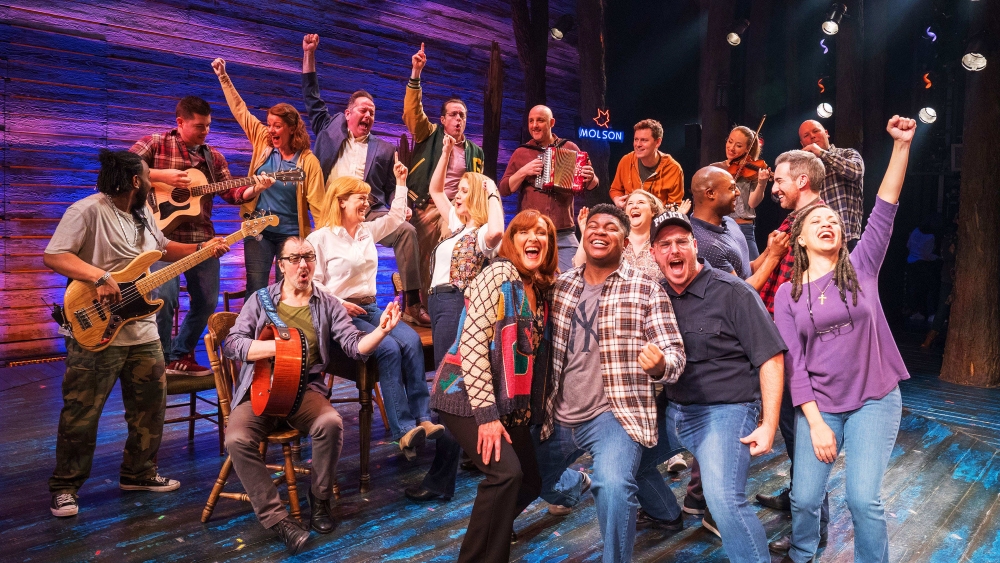
I have really complicated feelings about 9/11 material, be it films or books or exhibits or TV specials. I know the day means lots of things to lots of different people, and I can’t speak to most of them. In my mind, 9/11-focused content is associated with self-centered emoting by Americans, when the vast majority weren’t close at all to the tragedy. I consider, for instance, the people who breathlessly share stories of a friend’s cousin’s co-worker who was meant to be on a plane that day, or the drunk twentysomethings who, as parties stretch late into the night, inevitably wind up sitting in a circle sharing childhood memories of where they were on 9/11. Whose teachers let them watch the news? Whose parents refused to tell them any details? (I have definitely been in some of those circles, and these days I wince with embarrassment remembering the self-importance of our conversations.) I recognize that a lot of these responses are pretty universal human stuff, as we figure out how to remember a shared historic event, and a tragedy at that. I also recognize that I’m lucky that the emotions I and my loved ones experienced about 9/11 are ones that I can hand-wave away as self-indulgent. But those emotions still held power, and they still had their consequences. In my mind, 9/11-focused content is also associated with the violence done to people on the back of all our American emotions about that day.
For a short time on and after 9/11, some Americans got a glimpse of the kinds of lives that people around the world live every day, and sometimes at the hands of our own state: lives dominated by violence and disarray. In a review of Come From Away, one of the real-life “plane people” is quoted as saying that they ‘were all refugees that day’, drawing a parallel to the ongoing refugee crisis, and praising Newfoundland for taking in Syrian refugees decades after they took in the 9/11 passengers, but…goodness. The parallel makes you realize just how vast the gap is between people who were stranded for five days and actual refugees who have had their entire lives permanently upended. But these are the people who we are focusing on for this musical. We feel their emotions for these 100 minutes, including the soaring number that comes near the end of the musical, “Somewhere in the Middle of Nowhere,” when they celebrate touching back down in Texas, and for many characters, their home country. For nearly all Americans, it was possible to return to their hometowns after 9/11, which stood unaltered by the tragedy. Even New York City – one of the few places in America that actually deserves their emoting about the day – was physically there. Most refugees do not have the option of such a joyous homecoming.
But Come From Away is an incredible musical. It is moving, it celebrates kindness and acknowledges the depths and the bleakness of human feeling without trying to solve any of it. It is a joyous explosion of choreography and music, a train that starts rolling at full speed and doesn’t stop for its 100 minute run, even for an intermission. It employs one of my favorite theatrical tricks – a limited cast who all play different characters, and remain onstage virtually the entire time. It’s a triumph. That same song I mentioned above, “Somewhere in the Middle of Nowhere”, has been stuck in my head on a loop for the entire day. (I saw the musical last night – it was my second time, having watched it before the pandemic as well.) Here you can see a video of the cast performing an abridged version of this song: https://www.youtube.com/watch?v=jEZZVS15jmw
I would keep going to see this musical for a third or fourth time. I want to bring my family to see it, because I know they would enjoy it, and I have complicated feelings about that as well. This musical does not really challenge white, Christian Americans who voted for wars in Afghanistan and Iraq, who engaged in or tolerated Islamophobia, who hold the memory of 9/11 close as a time when they felt like victims, when they came together in collective mourning to sing patriotic hymns and plaster flags everywhere and soak up feelings of pride without having to consider any less pleasant feelings, like responsibility, like historical awareness, like guilt.
I cannot stress enough how much this musical is not supposed to be some patriotic celebration of America. It was written by Canadians as a celebration of a specifically Canadian spirit of generosity and kindness, alongside a pan-human capacity for compassion and camaraderie. It laser-focuses on the human dramas that unfolded in a very specific circumstance, and does not attempt to tell a larger story about the tragedy itself or what came after. It’s a masterwork in terms of technical artistry as well as its emotional accomplishments. I would full-heartedly recommend this musical to anyone who has not seen it.
Still. I have a weird feeling about 9/11-related art that I can’t shake. The musical includes a Muslim character who is racially profiled, both by fellow passengers and by airport security. There is no resolution; the musical allows him space to voice his humiliation and frustration (and also makes sure that its sympathetic central character, a white American pilot, apologizes to him personally…which I also have mixed feelings about?) but I’m not sure if this is enough. I’m not sure that enough space was made to acknowledge this toxic element of Islamophobia which is core to the story of how people responded to 9/11.
There are passing moments that I think might not age incredibly well – easy laughs from a man joking about getting a woman he likes even more drunk than she already is; characterizations of a gay character that lean into a ‘sassy’ type that you often see in media; etc. It’s nothing central to the plot, and I found it easy to forgive in a show that is otherwise firing on all cylinders so completely. But I did notice it.
This play was originally conceived in 2011 (on the back of many long interviews with the actual people portrayed), workshopped from 2012 onwards, and had its first professional productions on the West coast in 2015. It transferred to Broadway in 2017, two years later and in a completely different time. Reviews often praise it as a balm, celebrating human kindness in a way that We Can All Get Behind, In These Fraught Political Times. It’s not a Trump era piece of art, but it served the Trump era well, selling out to rapturous audiences and sweeping up awards recognition.
I don’t know that I have an argument to make about any of this; I just notice it.
I would recommend it to anyone who hasn’t seen it. I will recommend it to my family, too. I might mention the scene where characters who can’t speak the same language use a Bible to communicate. I was a bit surprised to see that some of the posters in the halls of the theatre included this Bible verse in their promotional material. That’s a bit…much, I thought. Are they actually playing to the American conservative tourist crowd, intentionally? It makes me sad, how I respond like this to the religion I still practice – well, how I respond to the trappings of it – viewing it mainly as a dog whistle for a political undercurrent that grows increasingly toxic by the day in my home country. (I know, I’m getting very off track now.)
Still, I love this musical. I’d like to watch it many more times. I cried to the music over and over today. I love how the characters are middle-aged, and not glamorous, and how they share the spotlight. I love the love story between a woman from Texas and an awkward Brit. I love the way that even structurally, it is a celebration of community. (An idea I can’t claim credit for – it comes from this Guardian review, and is another example of the show being such a universal crowd-pleaser that people can take from it whatever they will, including this review’s communalist framing of the show’s values.)
We can only hope that all of our across-the-aisle, crowd-pleasing, human-decency-celebrating art can reach this high quality. In a more optimistic time, I’d also hope that art like this could actually increase empathy in its audience in a radical or political way. But it’s not 2011 anymore, or 2015, or even 2017. I’ll recommend Come From Away to my family; I don’t expect it to change anything.
Written 2 November 2021

 Baseless Fabric
Leave a reply to mphtheatregirl Cancel reply