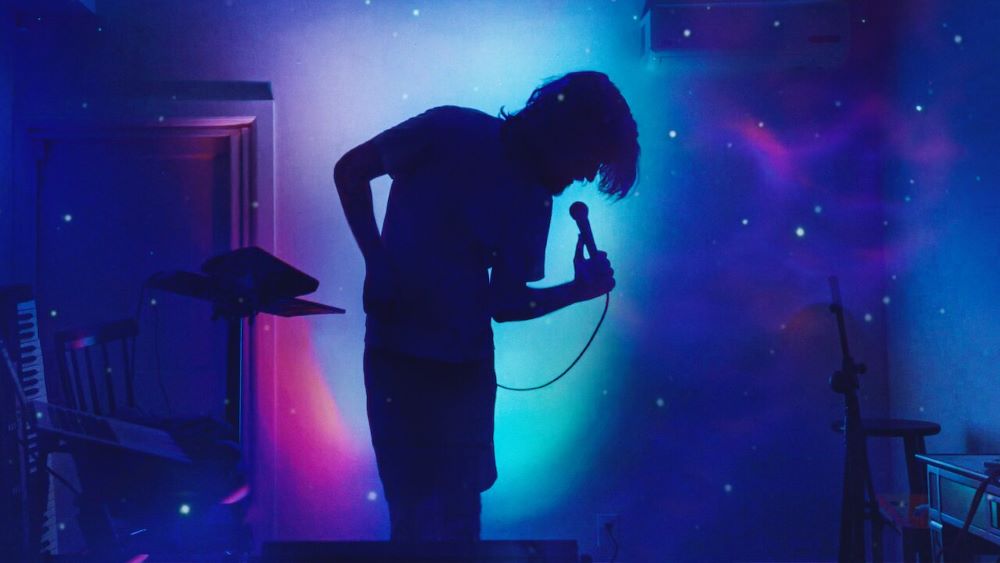
Bo Burnham’s Inside is a rich text, even by his high standards. When it was first released, I watched it over and over within the same week. I’ve returned to it several times since, and had the album on a loop, spending hours wrestling with the themes Burnham explores. (It’s probably why this entry wound up about three times as long as any of my others.)
There are close to a dozen songs from Inside that people have latched onto – or could latch onto – as the thematic centerpiece of the special and/or hail as individual masterpieces. I’ve seen various people on social media dish out this sort of praise for That Funny Feeling, All Eyes On Me, Welcome to the Internet, and I certainly feel it about the stand-out single that has long featured on Burnham’s YouTube page, White Woman’s Instagram.
Much of Inside treads familiar thematic territory for Burnham – the twin terrors of internet culture and his own mind, particularly while navigating his celebrity/entertainer status; the foibles of modern dating and sexual relationships; his discomfort with his identity as a privileged white guy. (As we’re going to wander around terms like “cancel culture” going forward, I implore you to check out Michael Hobbes’ explainer on the term, or the You’re Wrong About episode on the topic.)
But it almost goes without saying that, first and foremost, the thread that connects every moment of Inside is the coronavirus lockdown. It’s a focused artifact of this time period and the way that many of us lived through it, particularly young adults who were isolated and pushed further into the online life that Burnham has already proved expert at mining during his 14-year career, begun in his bedroom at age 16, delivering a trademark blend of musical art, humor and analysis.
This entry, for the first time, is going to come to you in three distinct parts. I’ve grouped Inside’s major songs by themes, at least as I see them, and I’ll examine each song and its potential thesis statement for Burnham’s project. There’s the cancel-culture-adjacent positioning of How the World Works, Comedy and Problematic; the dark corners of the internet and his own mind met with a blend of concern and compassion in White Woman’s Instagram, Welcome to the Internet, That Funny Feeling and All Eyes on Me; and the bookends to the first and second halves of the special, 30 and Goodbye.
As ever with comedy and first-person entertainment, a few questions hover throughout: What is the butt of the joke? What does it mean to be real or fake? What is even the point?
1. A Special Kind of White Guy
“I’m so worried that criticism will be levied against me that I levy it against myself before anyone else can.”
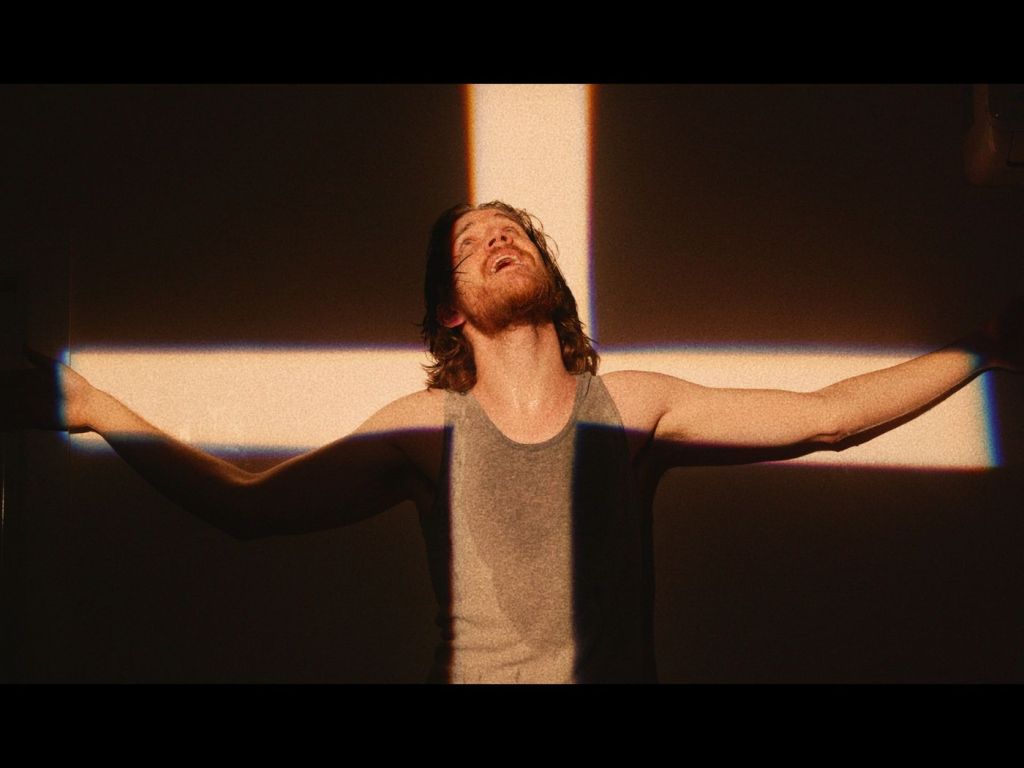
Bo Burnham has something to say about white guys, cancel culture, online activism, and that space that used to be called “politically correct” and is now labeled “woke”. At least, it seems like he does, because he spends a huge chunk of the special wrestling with it. But what is his message? Does he have one? When I first watched Inside, I’ll admit, I spent some time wondering to myself how exactly this was all going to land. The golden rule for ‘ethical’ comedy, as it were, is to keep track of a joke’s meaning and mechanics: what are we laughing at? Who or what is the punchline, the target? Are we punching up or punching down? (And as Burnham’s scribbled-on white-boards show in blink-and-you’ll-miss-them shots, he’s aware of them, too.) There are times during Inside where I’m not sure where these lines are being drawn.
In How the World Works, Burnham seems to actively shift these lines over the course of the song. He sets up a jovial and educational tone, as if this were part of a children’s program, singing alongside a sock puppet. After a bouncing verse listing banal, charming things about the world – bees, flowers, squirrels, birds – Bo cedes the floor to Socko to explain his thoughts on the world. As Socko lets loose a catalogue of the world’s ills, it seems like Burnham might be parodying the overly complicated, buzzword-laden verbiage of online-progressive-ese that Socko is clearly using, alongside what could be construed as an unwelcoming, inflexible stance toward someone ‘just trying to learn’. But then again – maybe Bo is using Socko’s voice to berate himself for things he views as legitimate concerns. (Ie, “Why do you rich fucking white people insist on seeing every socio-political conflict through the myopic lens of your own self-actualization? This isn’t about you!”) After all, just two scenes later, he’ll explicitly mock his need to engage in preemptive self-criticism as a “defense mechanism”, layering an ultimately cacophonous looping commentary over a snippet of a song in Unpaid Intern. This moment illustrates the crushing pressure that creators can face inside their own minds (see what we did there), but it also chimes with the over-the-top apologia we find in numbers like Comedy and Problematic.
At any rate, before we get ahead of ourselves, it’s worth considering the ending of How the World Works, which morphs into a dark articulation of power dynamics laid bare: Bo drops the ‘nice guy trying to learn’ act to remind Socko that he has the power to end him, and after putting the sock puppet in his place, he concludes the number back with its cheery chorus. That is how the world works! Is this the neat point we were leading up to all along, then? Is Socko meant to be the tragic hero of the piece throughout? Or in Burnham an equal-opportunity roaster, happy to sow laughs along the way in every direction, including those from mocking Socko’s woke-coded language? Who is the butt of the joke? Is it everybody?
Maybe the way Burnham builds the narrative in songs like this is masterful and deft. Maybe it’s just easy to see the comedy we want to see in them, and he’s giving us a Rorschach test of values, a choose-your-own-butt-of-the-joke adventure. I’m not comfortable being sure.
In Comedy, at least, the butt of the joke is clear. Burnham uses the first full-length song of the special to address the elephant in the room: he’s a white guy, and he wants your attention. Coming so early, it does feel like a bit of throat-clearing, particularly on the back of the (not explicitly referenced) George Floyd protests and widely-hailed ‘racial reckoning’ of 2020. But it’s also setting a tone: Burnham is going to spend a lot of the special attacking a caricature of himself, the useless white guy. It’s catchy, it’s funny, and for many, it’s relatable, but I often caught myself wondering: what are we doing here? Singing and joking about how white you are isn’t a get-out-of-doing-the-work card. (Or as Burnham puts it later, during the Unpaid Intern bit: “self-awareness does not absolve anyone of anything.”) Comedy presents Burnham roasting himself for his white-guy comedy that doesn’t help anyone or solve the world’s problems, before he goes ahead with his comedy that doesn’t…well, you get the picture.
Although this judgment isn’t entirely accurate, because while Inside isn’t solving any problems, it does seem to help people—particularly, when the special takes a turn toward the personal and roots itself in explorations of suffering and empathy, largely through Burnham articulating his own experiences of being inside his own head. This is where Burnham’s work shines, as it always has, and where it seems that he has something truly important to say. So maybe Comedy is what he needs to get out of his system in order to get there.
And, well, fair enough. As mentioned above, Comedy is catchy and hilarious, loaded with resonant lyrics that articulate exactly the kind of guy and behavior that so many people find so annoying. I’m a special kind of white guy, he sings. Healing the world with comedy, making a literal difference…metaphorically. One of my favorite bits is the joke repeated like a chant during the bridge:
If you wake up in a house that’s full of smoke
Don’t panic
Call me and I’ll tell you a joke
This reminds me of that joke that often floats around academic twitter, about someone calling for a doctor on a plane and your PhD being useless. If I can bowdlerize Dead Poets Society: art may be what we stay alive for, but it is not fundamentally necessary to keep someone alive.
I’m wandering afield a bit, so let’s get back to the one remaining song in this section: Problematic, perhaps the most head-on attempt by Burnham to address this theme. It’s right there in the title! And it’s also the one that fascinated me – and to be honest, confounded me – the most on first viewing. Problematic signals its nakedly satirical nature through the sado-masochistic imagery, as it clearly posits that there are parallels between the public humiliation of ‘cancel culture’ rituals and the sexual play of being punished or scolded. (He’s hardly the first to make this connection – just look at the title of the podcast Cancel Me, Daddy, which began in January 2021, four months before Inside was released.) But…what is he arguing here, exactly? Is he just pointing this connection out and saying it’s funny? Is he suggesting that this connection is (take a shot) problematic, and we should maybe think a little harder about this cycle of calling-outs, apologies, and pledges to do better? Is it criticizing people who either welcome or partake in these public beratements? Is that only because they’re just going through the motions – a tactic he skewers in his post-How the World Works sketch about a brand spokesperson? I may well be overthinking this, and that’s fine, but I know I’m not the only one who is flipping through this menu of options for meaning to attach to this song, and to Inside overall. Let’s just take a look at some of the Genius lyrics annotations for Problematic:
- “Burnham means what he says here: he wants to do the right thing and to prove that, he’s denouncing his past ‘sins’ in a format most of his fans are likely to see.”
- “Bo is highlighting how many celebrities and influencers who get “cancelled” will apologize to appease their fans without actually knowing what they did wrong or caring.”
- “Jesus was unfairly crucified by the Romans. Bo is expressing that some celebrities are being lit up on Twitter too much now that we have a heightened expectation of political correctedness. Bo expresses the need for people to apologize for ignorant actions but also explains the need for those offended to let it go.”
- “Many are quick to apologize just to avoid getting cancelled without actually caring what they actually did. They often make excuses such as not realizing what it meant and similar things instead of holding themselves accountable. The character that Burnham is playing is also seeking validation for doing the right thing before anyone can “cancel” him even further.”
- “One of the main points behind cancel culture is of cancelling people who say they are socially progressive when they have a past tainted with bigotry. This song, while a criticism of the same cancel culture for the removal of sincerity in celebrity apologies, also serves as a celebrity apology made sincere by the calling out of the insincerity.”
(As we will explore in more depth later, dipping into the comments section is not just a tried-and-true way to destroy your faith in humanity, it’s also a good way to destroy your faith in an author’s ability to control the interpretation of their work.)
For my part, I’m not completely sure what Burnham is doing with Problematic. He brings up behavior in his younger days in what seems like a genuine attempt at either an apology or ass-covering – take your pick – and then quickly subverts this with an apology “for the previous verse,” criticizing himself for providing context about his childhood. Are we meant to view this intervention as absurd, catering to the over-sensitive? Are we meant to merely sympathize with the endless layers of self-critical analysis he subjects himself to? I find myself spinning over the same questions that How the World Works and Unpaid Intern inspired, with their rapidly shifting perspectives and escalating rhetoric.
Helpfully, one of the Genius annotations points toward an old interview Burnham gave in 2016, which is a good way to glimpse the actual views he’s working from – well, at least the way he would have articulated them five years before Inside – and he provides some interesting context on how, in his view, “cancel culture” gets conflated with a nastiness that he would instead credit to internet culture more broadly. It’s a telling comment, as we will see as we get into the next section.
As a coda, it’s worth noting, for all of the anxiety on display, that Inside has landed to apparently universal acclaim. I haven’t seen any takedowns floating around the world of think pieces and social media, though I suppose that could always change. Landing gently on arrival doesn’t mean that you’ll be in the clear forever. I’m thinking of the recent dust-up around A Little Life, for instance, a novel that enjoyed universal acclaim for years until the tides began to shift on Twitter, and people started discussing how they found some of the author’s choices weird and troubling. No one’s been canceled, the author’s new book is on track to be very successful, but there is now some concrete discontent in a discourse that used to be squeaky-clean.
So who knows! Perhaps it’s not even anxiety on display here; perhaps this commentary actually betrays a strong sense of confidence and self-awareness, and Burnham knows that he has struck the correct balance with grace and precision. Only time will tell how this stuff ages, and whether or not Bo Burnham will eventually be called into the court of public opinion to perform the scripts he’s prepared here.
2. Getting Real and Going Online
“I’ve learned something over this last year…that real-world human-to-human tactile contact will kill you, and that all human interaction, whether it be social, political, spiritual, sexual, or interpersonal, should be contained in the much more safe, much more real, interior digital space.”

This group of songs feels a little clunky to me as a category, I’ll be honest. Maybe it would be possible to draw a dividing line between the songs that deal directly with internet culture, and those that explore Bo’s personal mental anguish. But I found that they overlapped so frequently that it was easier to consider them all together.
Neither topic is new territory for Burnham, of course. (And there’s nothing wrong with that! Artists can make good new art on old themes; I’ve probably got a post in me about how Taylor Swift keeps referencing her annus horribilis in her three most recent albums even after practically dedicating 2017’s Reputation to it.) In Sexting, an ode to the awkward surreality of trying to forge sexual connection using only your phone, I saw an outgrowth from his past commentary on relationships in the aptly titled Lower Your Expectations from his 2016 special Make Happy.
Sexting also provides an interesting data point when measuring the “authenticity” of Burnham’s special, or rather, how his audience reads Inside as “authentic”. Much of the buzz and praise for Inside stems from its presentation as Burnham’s genuine personal experiences of lockdown. Of course, he is not crafting a documentary; in creating a piece of art, he is expressing how his experiences feel, not reproducing them entirely. But audiences struggle to remember this, and don’t always recognize the difference between Burnham’s moments of honest confession, and the times when he is adopting a character to express his observations. Sexting would appear to be an instance of the latter, particularly after one learns that Burnham has been with his long-term girlfriend since 2013, and they locked down together in 2020, both living in Burnham’s much-larger actual home attached to the guest house where he filmed Inside.
“Honestly, it kind of ruins the realism of the special if, instead of living isolated in a one-room house for 15 months while he created the special, he just left the room at the end of the day and went home to his girlfriend,” wrote a user on Reddit. “All of those lines about being lonely & isolated and “not showering in 9 days” feel untrue with the context of him having a girlfriend. I was under the impression while watching that he had no girlfriend and had no one to talk to, which has why his mental health deteriorated as much as it did. Now I’m beginning to question the authenticity of this special in its entirety.”
Other users in the comments push back against this criticism – pointing out, among other things, that people in relationships can have severe depressive episodes, too – but Inside is clearly engaging in a balancing act of authenticity, presenting a one-man one-room DIY aesthetic that is close to true, but is still a construction. Indeed, Inside is thematically fixated on the performative facades that people employ, whether it’s Burnham as an individual in the context of his own work, or the way everyone performs through their digital personas. “You say lmao,” he sings to his Sexting partner (real or imaginary), “but I doubt that.”
Authenticity is one of those themes that comes out a lot when we start talking about internet culture, and it’s on full display in the response to White Woman’s Instagram, the song that, at least to me, feels like the calling card of Inside. It was one of the earliest stand-alone music videos pulled for YouTube and it certainly stands on its own, a little capsule of the comedy that Burnham does so well. It’s the most visually dense song in the special for the sheer volume of prop-heavy shots, each one a recreation of a different type of instagram post, and it displays Burnham’s immense fluency in his subject. If you spend even a fraction of the time scrolling Instagram that I do, you will definitely recognize this stuff. Which makes for a very straightforward joke: Look at this familiar behavior! Isn’t it funny to see Bo dress and pose himself like a young woman? (Insert all sorts of writing about the ‘inherent comedy’ of men in drag here, from A Midsummer Night’s Dream on, and allllll that that entails…) Some of the bits will make you go, my friends totally do that! Some of it will make you go, oh no, I totally do that! The tune is light and the lyrics don’t come across as mean-spirited, though I’ll admit that on my first listen, I was a bit disappointed by Burnham apparently taking a lazy shot at a safe target. Ah yes, the “basic” white woman of so many pumpkin spice latte flavored takes that we all began to wonder: is it just thinly-veiled misogyny when white men criticize “white women” like this? I wondered why Burnham couldn’t stick to the stronger footing of mocking himself or white guys generally, as he had earlier in the special. A memo to white men: I don’t know what direction you think you’re punching when you make fun of white women, but it’s not up! (Of course, many white women get defensive any time we are made a target, so let’s be clear: it’s okay to make fun of white women! I just get a weird feeling when white men do it?)
But then the twist comes in White Woman’s Instagram. When that bridge hit, everything clicked into place. Oh, okay, you fucking genius, I thought, the point was that she’s been a full person all along. The titular white woman may post some cringe content, but Burnham is reminding his audience that she is just making her way through the world, with the full range of human emotions that that entails, and doing her best, like the rest of us. I’d even go so far to say that the song suggests that it’s okay for her to enjoy her goat’s cheese salads and simple glasses of wine, that we are witnessing a person who is building a life in spite of her pain, celebrating the small harmless joys along the way (well, mostly harmless – looking at you, misattributed MLK quote), and sharing them with the people in her life, in the short and precious time that they have together.
And then, I went to the comments section.
There’s a lot of people in the YouTube comments suggesting readings similar to mine, and there’s even the occasional woman praising Bo for appreciating the way women can create “heaven” with their aesthetics, which was sort of adorable for its lack of sarcasm detection? But then there were the commenters that swung the other way, that see the video as a takedown of how “fake” women can be on social media. I was particularly annoyed by a comment that suggested that the aspect ratio changes during the song – it widens from the typical Instagram size during the grief-laden bridge, and then returns to the original format afterwards – were signaling how the subject turned away from her ability to be real and vulnerable instead went back to being “shallow”, “performative” and “focusing on herself again”. Call me crazy, but I thought that this shift in the camera was about us, the audience, and how we view her! It’s our perspective that is changing, not the subject!
But here we are again, considering authenticity. These comments reminded me of how men expect “realness” and punish perceived “fakeness” from women, online or otherwise. (See: glorifying “low maintenance” women, thinking of make-up as trickery, Love Island and plastic surgery shaming…) Being “fake” is clearly one of the things men hate the most in young, sexually appealing women. It frightens them and terrifies them. There’s an interesting male insecurity on display there, I suppose, but mostly this policing is just maddening. We are not products for your consumption, guys! Everything women do on social media isn’t about you! All this filtering of our lives, creating a narrative of the self…there’s tons to unpack here that isn’t about, like, tricking men into finding us attractive.
I’m reminded of Lower Your Expectations, the Make Happy song referenced above, in which Burnham teases a woman’s ideal man as: a bad boy, a good boy, a good bad boy, a half-good half-bad half-boy. And vice versa? A real girl, a hot girl, a really hot girl, a brand new, really hot, real doll. (That video, again, is here.)
I’m also reminded of the “Cool Girl” passage from Gone Girl, where the female lead takes her whole gender to task by arguing, “They’re not even pretending to be the woman they want to be, they’re pretending to be the woman a man wants them to be.” We do not have time to get into a full-length analysis of the weird marriage of feminist analysis and internalized misogyny on display here (though I’d love to highlight that, in that passage, when Amy Dunne imagines intervening in these deeply inauthentic relationships, she imagines confronting and rescuing the men, not the women!) but suffice it to say: the fictional sociopath, hear me out, may not be giving a full and accurate picture here.
Personally, I think White Woman’s Instagram is a masterpiece in empathy, and I think empathy is one of the areas where Burnham’s work shines. During the times in his specials where he gives attention to his own mental pain, he turns this empathy on himself – and by extension, others going through similar things – and produces some of his most powerful work.
The back half of Inside is particularly focused on this thread, but it’s laced throughout the special. (Burnham makes his first reference to suicidal thoughts during Inside’s first address to the camera, just after Comedy.) It’s clear that the way he wrestles with the torment of online life cannot easily be separated with the torment he feels existing inside of his own head.
For instance, in Welcome to the Internet, Burnham delivers a rapid-fire encapsulation of the multifaceted experience of being online (“May I interest you in everything, all of the time?”) while also impersonating the ever-faster pulsing of the internet’s tantalizing, disturbing siren call – and in doing so, articulating a narration that he seems to feel pulsing inside of his own head. The initially upbeat tone of the song shares some DNA with How the World Works, as it grows into an increasingly disturbing diagnosis of the ills of the human experience. Welcome to the Internet marries this dystopic vision with a demented glee as Burnham rattles off phrases that are something between Buzzfeed listicle titles and chyrons from Succession’s ATN.
Soon after, Burnham gives us another list song in That Funny Feeling, though here the feeling is more stripped-back and less manic. His voice takes a melancholy tone as he sits alone with his guitar, against lighting and audio cues that bring a campfire to mind, and lays out a catalogue of absurdities from late-stage-capitalism and our near-extinction age. It’s made commentators think of American Pie and the John Green essay collection The Anthropocene Reviewed, a beautiful, part-elegiac, part-hopeful reflection on, as Carl Sagan originally put it, “the universe observing itself.” That Funny Feeling plays like a prematurely arriving credits song for Don’t Look Up, or a companion piece to any media that wonders how on earth we are to squeeze meaning and happiness out of our remaining time with consciousness, knowing that doom is coming. (Spoiler alert: doom has always been certain, because you were always going to die – or face, as John Green calls it in The Anthropocene Reviewed, your “personal apocalypse”. Green continues: “part of our fears about the world ending must stem from the strange reality that for each of us our world will end, and soon.”) Burnham describes this beautifully in one of my favorite lyrics from the whole special: the quiet comprehending of the ending of it all.
This awareness of our own mortality, or even just the mortality itself, is what some argue (though I suspect it stems at least in part from necessity) gives meaning to human lives. (This came up in a debate I had with a friend recently about artificial intelligence and how you define humanity. My boyfriend stuck to the Bicentennial Man rule: to be human, you have to be mortal.) It’s an interesting idea…being temporary is what bestows meaning on individual human lives. Maybe the apocalypse is an idea that we needed to invent, then, in order to give meaning to human life on a grander scale. (And indeed, we have been inventing the ideas of various apocalypses for centuries, as religious concepts and otherwise.) What a weird inversion of so much common sense and anxiety, as we worry about the futility of human effort: in order to assign meaning to the human project as a whole, does it need to be finite? Do we need to have an ending? Do we need to be heading somewhere, building to something?
Burnham wrestles with these questions in the much smaller context of, you know, his comedy special. About an hour in, wondering if he can just opt out of finishing, he declares that he will never complete or release Inside. “So yeah, who fucking cares? Fuck you, and goodbye, and let’s keep going.”
That Funny Feeling has been singled out as the “centerpiece” of Inside by Rolling Stone, which also called it a “state-of-the-union address.” But another final act song is perhaps Inside’s most celebrated: All Eyes on Me, the culmination of Inside’s many songs and moments focused squarely on Burnham’s declining mental health. There are the short songs Shit and All Time Low where he plainly states that he’s not doing well; the lyric “googling derealization, hating what you find” from That Funny Feeling; or even the reference in 30 to developing a “dissociative mental disorder.” All Eyes on Me brings this to a climax, though, in a direct address that delivers the punchline the whole special seems to have been building to:
You wanna hear a funny story?
So, uh, five years ago, I quit performing live comedy because I was starting to have severe panic attacks while on stage, which is not a great place to, uh, have them. So I quit and I didn’t perform for five years and I spent that time trying to improve myself, mentally. And you know what? I did! I got better. I got so much better, in fact, that in January of 2020 I thought, you know what, I should start performing again. I’ve been hiding from the world and I need to re-enter.
And then, the funniest thing happened.
The lyrics of All Eyes on Me express a nihilism that goes back to early numbers like Comedy, where Burnham wonders if anything he does will make a difference: You say the whole world’s ending, honey, it already did / You’re not gonna slow it, heaven knows you tried. There’s also a much longer thematic thread tying this style of confessional song to his earlier work, most noticeably the show-stopping Can’t Handle This from Make Happy. It’s something to re-watch this number, already haunting, with the words from All Eyes on Me in mind.
It’s clear from the YouTube comments to the critical reception that this is the area of Burnham’s work that resonates most deeply with people, and that there are real positive impacts to him sharing his experiences. It matters to people when art makes them feel less alone. It’s one of the main points of art.
There are parts of Inside where Burnham’s frank discussions of his suicidal thoughts concerned me – should this come with a warning, I wondered, or some sort of resources, a message at the end about how to seek help if you need it? But maybe I’m putting too much of a burden on Inside’s shoulders. I’m not an expert. (Note: I watched the credits all the way to the end, and there is a slide with a website people can visit.)
But these are certainly the moments where Inside appears the most raw and real. Burnham is clearly troubled by the balance between performing for his audience, delivering the laughs and the validation they desire, offering up his authentic self, offering up a performance of an authentic self, and how you can even tell the difference. With the internet, we all get to be part of the show.
3. What’s Left?
“We shouldn’t be dead forever, yet. So let’s not.”

There’s only a handful of songs over 2 minutes in length left in the special that I haven’t hit yet. Some, like FaceTime with My Mom (Tonight) fit pretty easily into our established buckets – in this case, isn’t-digital-life-funny with a darker side (the lyrics are light observational comedy, but played over Burnham disintegrating into a fight with his mom over the phone). Two of them serve as the finales for each half of the special.
We’ll consider the second first: Goodbye is a mash-up of the previous songs, used to pull out particularly thematically pertinent lyrics, or to echo them with a slight alteration, looking at their meaning from a different angle. (Goodbye is also littered with jokes that reference lockdown – you can pick the street, I’ll meet you / on the other side is one of my favorites.) There’s a powerful emotional payoff in Goodbye in a reference to the seemingly less-searching Comedy from the special’s beginning:
When I’m fully irrelevant and totally broken, damn it
Call me up and tell me a joke
Here, Burnham is no longer the savior – instead, he’s the broken person in need of help. And this help takes the form of a joke. Building on the ground covered in the last section, maybe it’s time to revisit the Dead Poets Society reference I made earlier. Sometimes art isn’t just what we stay alive for – sometimes it is what we need to keep us alive.
I’m not going to pretend that this next song has had quite a profound impact on me as all that, but damn, do I love it. White Woman’s Instagram has my mind but 30 has my heart, and an absolute death grip on my spotify wrapped. This is my personal favorite, my chosen centerpiece of the special, an impossibly catchy and bouncy mix of celebratory toast and existential screech. I’m turning 30 in a few months, and I’m so very grateful that this song exists so I can look forward to blasting it at midnight on my birthday. I did use to wake up with a smile and go to bed at night with a dream! God dammit is right!
30 is an nakedly autobiographical song (performed, in fact, almost naked – as in many other places in the special, Burnham pairs baring his soul with baring his body) about prodigiousness and mortality and the weird pain of existence and, to me, it is perfect. No notes.
So, at long last, I think this is where I leave things. Like Inside itself, this entry has gone on…way longer than planned! But we got there in the end. I’m glad this art exists. I hope Bo Burnham is doing okay. By letting us in on how it feels when he’s not, he gives us permission to recognize and empathize with that not-okayness in ourselves, and I hope that fact gives him some peace about the work he’s created.
Written 22 February 2022
 Baseless Fabric
Leave a comment